

Human Design: How to Calculate and Understand Your Chart
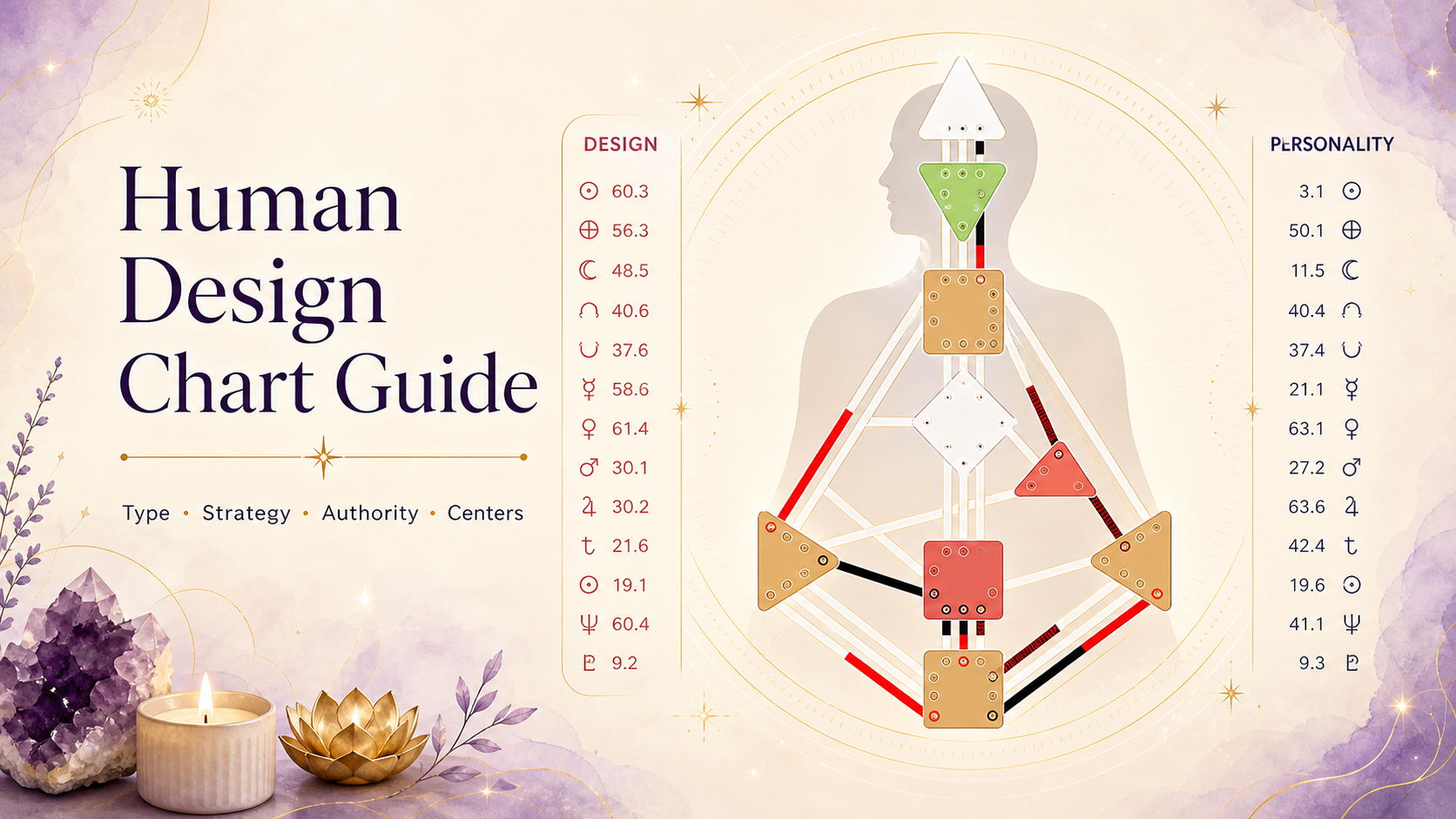
Human Design is a self-discovery system that helps you explore how you make decisions, use energy, relate to others, and recognize your natural gifts and traits.
Unlike a simple personality quiz or Human Design test, your Human Design chart is usually calculated from your birth date, birth time, and birth place. The result is often shown as a bodygraph, a visual map that includes your Energy Type, Strategy, Authority, Centers, Gates, Channels, Profile, and other chart details. Wikipedia describes Human Design as a holistic self-knowledge system that combines astrology, the I Ching, Kabbalah, Vedic philosophy, and other symbolic frameworks.
Human Design is best used as a reflective framework, not as a fixed label or clinical tool. It can help you notice patterns, understand your decision-making style, and ask better questions about relationships, work, emotional energy, and personal direction. Verywell Mind describes Human Design as a modern personality philosophy and notes that it is not scientifically validated, so it should be treated as a self-awareness tool rather than a medical or psychological diagnosis.
If you are new to Human Design, this guide will help you understand what your Human Design chart shows, how to calculate Human Design, and what terms like Generator, Manifesting Generator, Strategy, Authority, open Centers, active Gates, and the arrows around the head actually mean.
What Is Human Design?
Human Design is a chart-based self-discovery system. Instead of giving you one simple personality label, it creates a bodygraph that shows how your energy is believed to move, respond, and interact with the world.
A Human Design chart often includes:
- Energy Type
- Strategy
- Authority
- Profile
- Defined and undefined Centers
- Gates
- Channels
- Variables, often shown as arrows around the head
- Life themes and energetic patterns
Wikipedia’s overview of Human Design explains that the system maps nine energy centers in the body and uses a chart to show defined centers, gates, and other symbolic elements. For beginners, this means the chart is not just one label. It is a layered map of Type, Strategy, Authority, Centers, Gates, Channels, and Profile.
The goal is not to predict exactly what will happen to you. The value is in learning how you naturally respond to life, how you make decisions, where you may absorb outside pressure, and where you may have consistent strengths.
That is why many people use Human Design for self-growth, relationships, work direction, emotional clarity, and understanding their gifts and traits.
What Is a Human Design Chart?
Your Human Design chart, sometimes called a bodygraph, is the visual foundation of the system.
A bodygraph usually shows nine Centers connected by Channels and Gates. Some Centers may appear colored or defined. Others may appear white or undefined. This visual pattern is used to explore where your energy may feel consistent and where you may be more open to outside influence.
For beginners, the most important parts of your Human Design chart are usually:
- Your Energy Type
- Your Strategy
- Your Authority
- Your defined and undefined Centers
- Your Profile
- Your active Gates and Channels
You do not need to understand every symbol at once. Start with Type, Strategy, and Authority first. These three parts give you the basic language for how your chart works. A Medium beginner guide to reading a Human Design chart also points beginners toward Type, Strategy, Inner Authority, and Profile as important first elements to understand.
How to Calculate Human Design
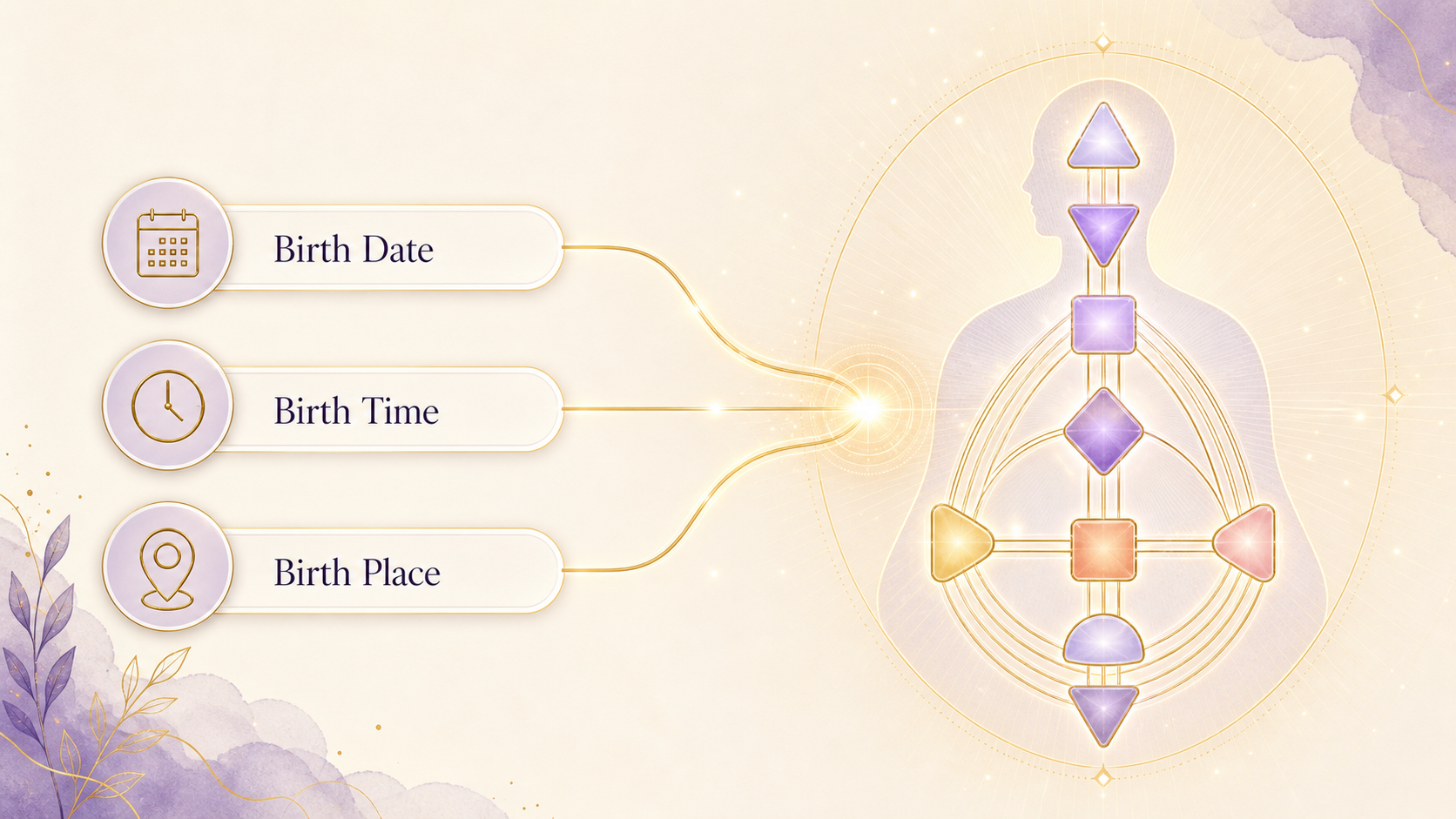
To calculate Human Design, you usually need three pieces of birth information:
- Birth date
- Birth time
- Birth place
A Human Design generator or chart calculator uses this information to create your bodygraph. Because the chart depends on time and location, two people born on the same day may still have different charts if they were born at different times or in different places.
This is why an accurate birth time matters. If you only know your birth date, your Human Design chart may still be estimated, but important details such as Authority, Profile, Gates, Channels, or arrows may change.
A Medium guide for Human Design beginners explains that a Human Design chart, also called a bodygraph, is calculated using birth date, time, and place. So if you are searching for “calculate Human Design” or “your Human Design chart,” the best first step is to prepare your birth date, birth time, and birth place before generating the chart.
The Five Human Design Types
One of the first things people look for in a Human Design chart is their Type.
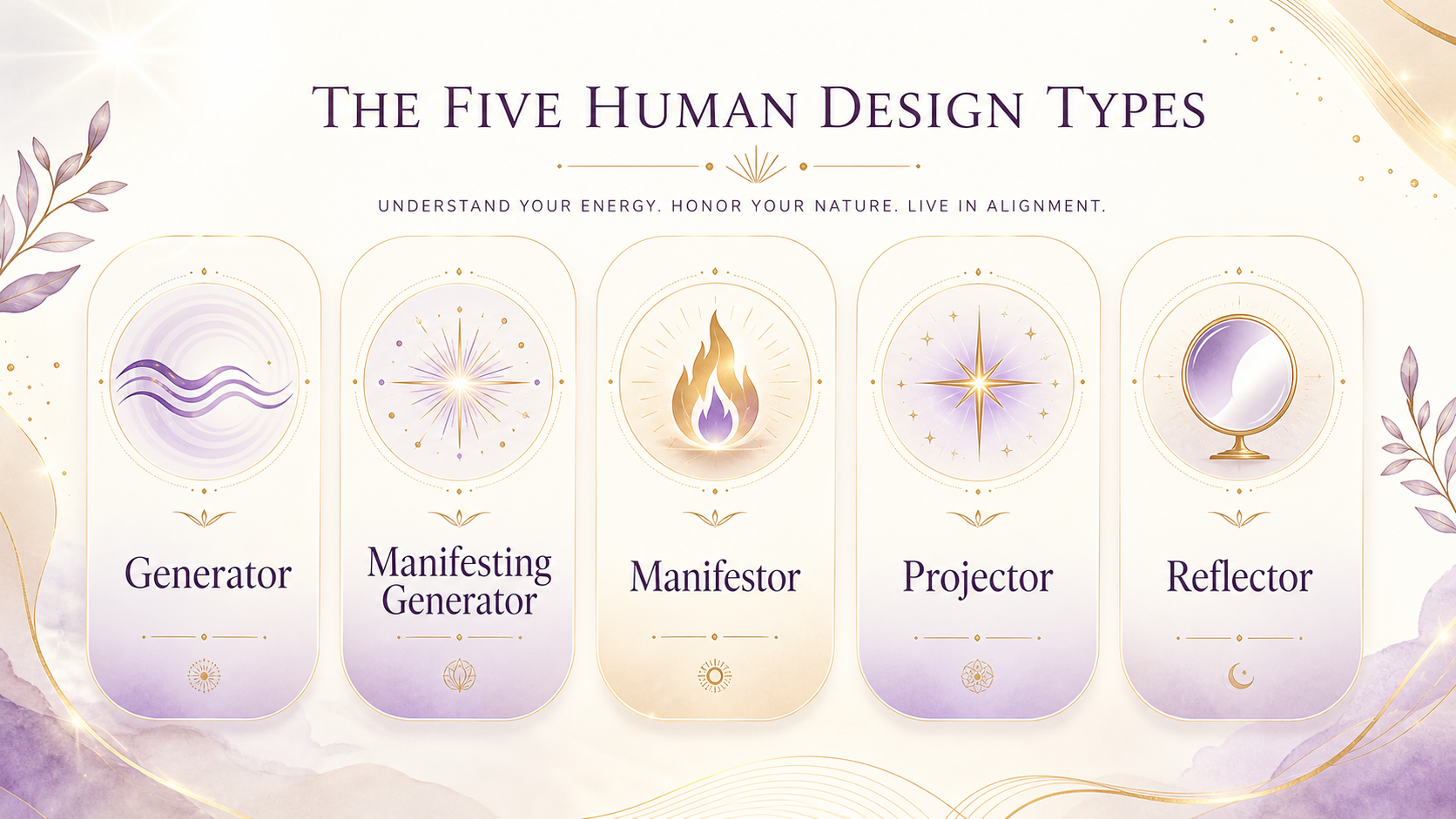
Human Design Types describe how your energy is believed to interact with the world. The common Human Design Types are:
- Generator
- Manifesting Generator
- Manifestor
- Projector
- Reflector
Verywell Mind’s overview also summarizes the five energy types: Manifestors, Generators, Manifesting Generators, Projectors, and Reflectors. Each Type has a different Strategy, which is the suggested way to engage with life, opportunities, relationships, and decisions.
Generator Human Design
Generators are often described as having steady life-force energy when they are engaged with something that feels correct. In Generator Human Design, the key lesson is usually not to force everything from the mind, but to notice what the body responds to.
If you are a Generator, your Strategy is usually connected to response. This means life may feel clearer when you respond to real signals, invitations, questions, opportunities, or situations in front of you.
Common Generator themes include:
- Finding what gives you energy
- Learning when your body says yes or no
- Not forcing a path just because it sounds logical
- Building mastery through consistent engagement
- Understanding what satisfaction means for you
If you searched “the Generator Human Design,” you are probably looking for what your Type means in daily life. The most useful question is not only:
“Am I a Generator?”
It is also:
“What does my chart show about what I am here to respond to?”
Manifesting Generator Human Design
Manifesting Generators are often described as fast-moving, multi-passionate, and nonlinear. A Manifesting Generator may move quickly from idea to action, but still benefits from checking whether the body is responding correctly.
Manifesting Generator Human Design often focuses on:
- Moving with energy instead of pressure
- Allowing a nonlinear path
- Testing, adjusting, and refining
- Not forcing yourself into one narrow identity
- Learning what is truly exciting versus what is only urgent
If you are a Manifesting Generator, you may feel frustrated when you try to follow a slow or rigid life path that does not match your natural rhythm. Your Human Design chart can help you reflect on how to move quickly without skipping your own inner clarity.
Human Design Strategy and Authority
In Human Design, Strategy and Authority are two of the most important concepts.
Your Strategy is connected to your Type. It describes how you are designed to engage with life.
Your Authority describes how you are designed to make aligned decisions.
A Medium guide on Human Design charts highlights Type and Strategy, Inner Authority, and Profile as key terms beginners should pay attention to when reading a chart. This is why many Human Design coaches tell beginners to focus on Strategy and Authority before getting lost in every detail of the chart.
For example:
- A Generator may learn to respond.
- A Manifestor may learn to inform.
- A Projector may learn to wait for recognition or invitation.
- A Reflector may need time and environmental clarity.
- A Manifesting Generator may learn to respond, then move with aligned energy.
Authority adds another layer. It may point to emotional clarity, sacral response, splenic intuition, ego will, self-projected direction, or another decision-making pattern depending on your chart.
A useful Human Design chart should not only tell you your Type. It should help you understand how your Human Design Strategy and Authority work in real situations.
Defined and Undefined Centers
Centers are one of the most visual parts of your Human Design chart.
A defined Center is usually shown in color. It is often interpreted as an area where you may experience more consistent energy.
An undefined or open Center is usually shown in white. It is often interpreted as an area where you may be more sensitive to outside influence, conditioning, or environmental energy.
This does not mean white Centers are bad. They can show flexibility, openness, perception, and learning. A white Center simply means that energy may not operate in the same consistent way as a defined Center.
For example, someone with an undefined Emotional Center may be sensitive to the emotional atmosphere around them. Someone with a defined Emotional Center may experience emotional waves more consistently from within.
The point is not to judge your chart. The point is to understand how you naturally experience energy.
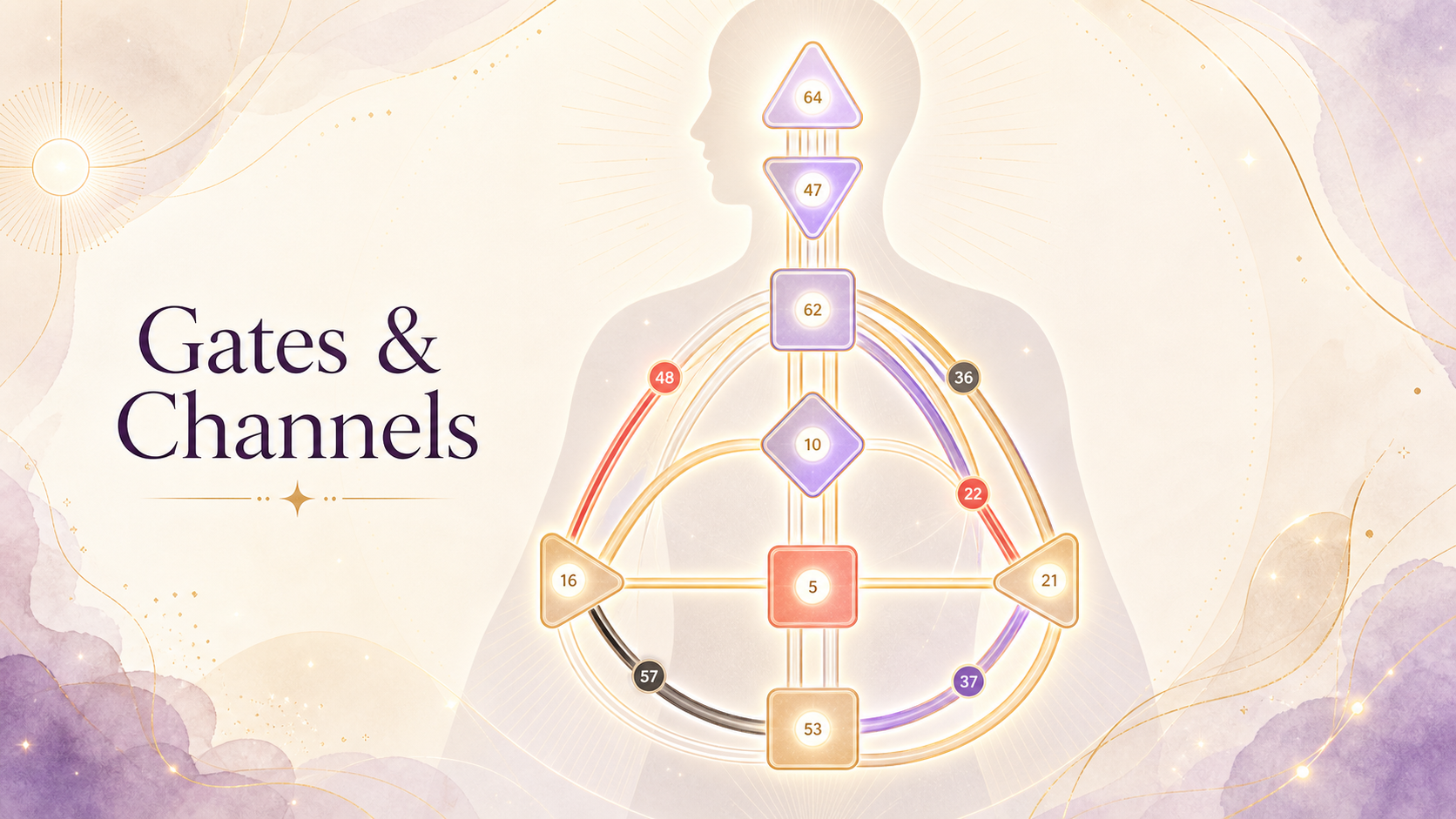
Gates and Channels in Human Design
Gates are specific points in the bodygraph. Channels are connections between Gates.
A Gate can show a specific theme, trait, pressure, talent, or pattern. A Channel forms when two connected Gates are active, creating a defined pathway between Centers.
This is why two people with the same Human Design Type can still feel very different. Your Type gives the broad structure, but your Gates, Channels, Profile, Centers, and Authority add detail.
If you want to find your gifts and traits through Human Design, Gates and Channels are often where the chart becomes more personal.
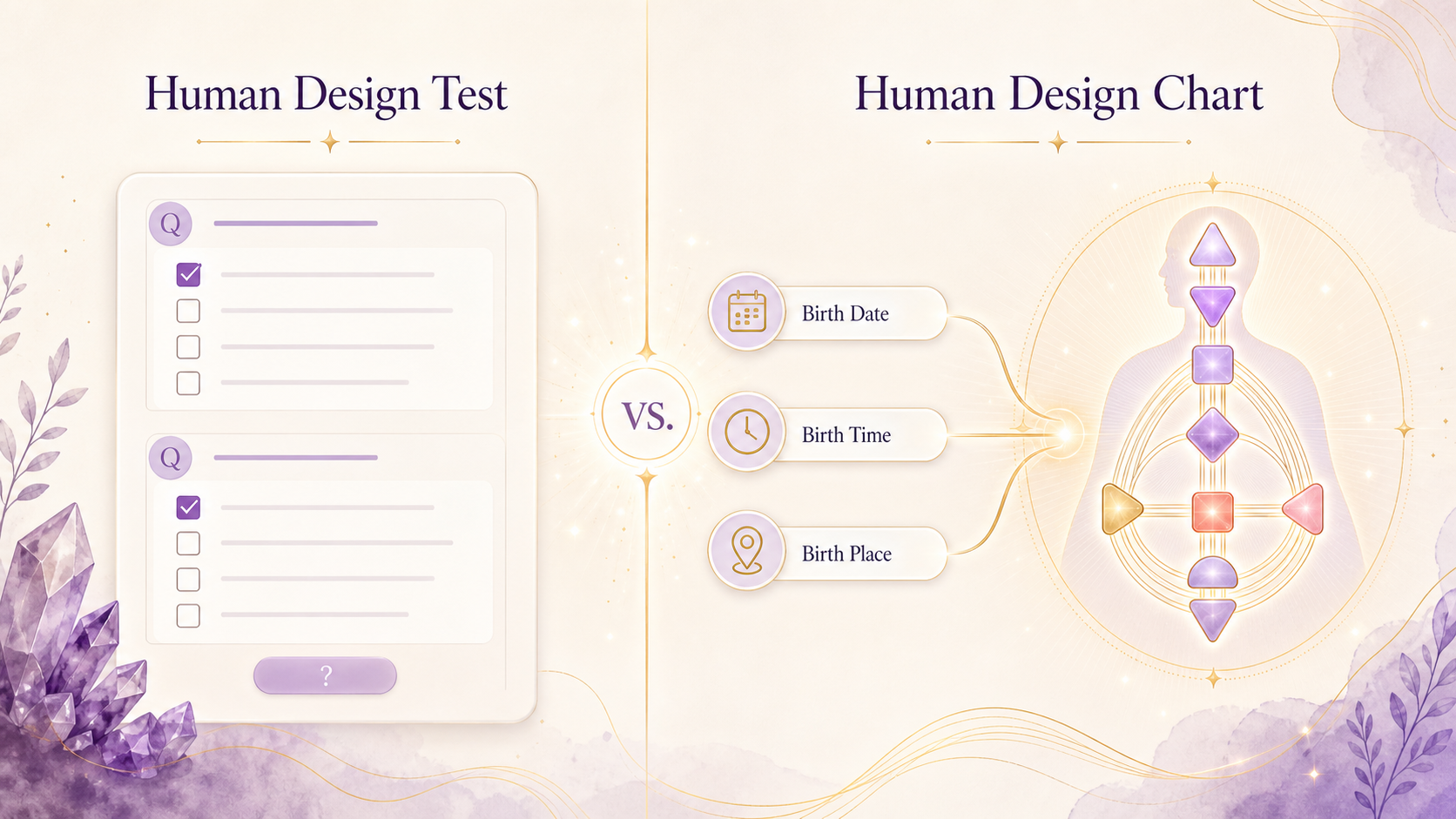
Human Design Test vs. Human Design Chart
A Human Design test may ask you personality-style questions. That can be useful for reflection, but it is not the same as a calculated Human Design chart.
A test is based on your answers.
A chart is based on your birth data.
That difference matters.
A test can tell you how you currently see yourself.
A chart gives you a symbolic map to reflect on your patterns.
If you are serious about Human Design, start with your chart first. Then use questions, journaling, coaching, or guided insights to understand what the chart means in real life.
How a Human Design Coach Helps
A Human Design coach can help you interpret your chart beyond the surface level.
Instead of only saying, “You are a Generator” or “You are a Manifesting Generator,” a coach may help you explore questions like:
- How does my Strategy show up in relationships?
- How does my Authority guide career decisions?
- Why do I feel pressure in certain situations?
- What gifts and traits are consistent in my chart?
- Which Centers are defined, and which are open?
- How do my Gates and Channels shape my patterns?
MysticX approaches Human Design in a similar reflective way. The goal is not to give you a fixed identity. The goal is to help you understand your chart, ask better questions, and apply the insights to love, work, emotional patterns, and self-growth.
Find Your Gifts and Traits Through Human Design
Human Design can be most helpful when you use it as a mirror.
Your chart may help you notice:
- What gives you energy
- Where you may feel conditioned by others
- How you make clearer decisions
- What emotional patterns repeat in relationships
- What kind of work rhythm feels natural
- Where your gifts and traits may be most consistent
- How to stop forcing a path that does not fit you
SELF explains Human Design as a self-discovery system that has become popular on social platforms because it gives people a language for alignment, conditioning, and personal patterns. For MysticX, that is the most useful way to frame Human Design: not as a rigid identity label, but as a reflective tool for understanding yourself more clearly.
The point is not to become trapped by your Type. The point is to understand your design well enough to live with more self-trust.
Human Design FAQ
What is Human Design?
Human Design is a self-discovery system that uses birth date, birth time, and birth place to generate a chart called a bodygraph. The chart is used to explore Type, Strategy, Authority, Centers, Gates, Channels, Profile, and personal patterns.
How do I calculate my Human Design chart?
To calculate your Human Design chart, you usually need your birth date, birth time, and birth place. A Human Design chart calculator uses this information to generate your bodygraph and chart details.
What are the five Human Design Types?
The five common Human Design Types are Generator, Manifesting Generator, Manifestor, Projector, and Reflector. Each Type has its own Strategy, energy pattern, and way of engaging with life.
What is the difference between Human Design Strategy and Authority?
Strategy describes how your Type is designed to engage with life. Authority describes how you are designed to make aligned decisions. Together, Strategy and Authority are two of the most practical parts of a Human Design chart.
Why is my Center white but some Gates are active?
A white Center usually means the Center is undefined or open. However, individual Gates connected to that Center can still be active. A Center usually becomes defined when there is a complete active Channel connecting two Centers. So yes, a Center can be white while some Gates are active.
This is also a common beginner question in Human Design communities. For example, Reddit users often ask about open Centers, empty Centers, partial Channels, and what it means when a Center is white but Gates or Channels appear active. See examples from r/humandesign discussions on open Centers and partial Channels.
What do the numbers next to the arrows mean in Human Design?
The arrows around the head are often called Variables. They are connected to deeper layers of Human Design, such as environment, perspective, motivation, and how you process information. Beginners should usually start with Type, Strategy, Authority, Centers, Gates, and Channels before studying the arrows.
This is another common question in Human Design communities. Reddit discussions often ask about the four arrows, variables, and the numbers or shapes shown around them. See examples from r/humandesign on numbers under the variable arrows and the four arrows in a Human Design chart.
Is a Human Design test the same as a Human Design chart?
No. A Human Design test is usually based on questions and answers. A Human Design chart is calculated from birth date, birth time, and birth place. A test can help you reflect on how you see yourself, but a chart gives you the symbolic structure used in Human Design.
Can birth date alone show a Manifestor with Ego Authority?
Usually, birth date alone is not enough. To calculate whether someone is a Manifestor with Ego Authority, you normally need birth date, birth time, and birth place. Without accurate birth time and place, parts of the chart may be incomplete or inaccurate.
Start with Your Human Design Chart
If you want to understand Human Design, do not start by memorizing every term.
Start with your own chart.
Calculate your Human Design chart using your birth date, birth time, and birth place. Then look at your Type, Strategy, Authority, Centers, Gates, and Channels.
From there, ask practical questions:
- What does my Type say about how I use energy?
- What does my Strategy say about how I meet life?
- What does my Authority say about how I make decisions?
- Which Centers are defined or open?
- Which gifts and traits feel familiar?
- What patterns do I want to understand more deeply?
Human Design becomes more useful when it moves from abstract language into your real life.
MysticX helps you generate your Human Design chart and explore what it may mean for relationships, work, emotional clarity, decision-making, and self-growth.
Your chart is not a box.
It is a starting point for understanding yourself more clearly.
Explore Your Human Design Chart on MysticX
Generate your Human Design chart with your birth date, birth time, and birth place. Discover your Type, Strategy, Authority, Centers, Gates, Channels, and personal insights for love, work, decision-making, and self-growth.

Related Posts
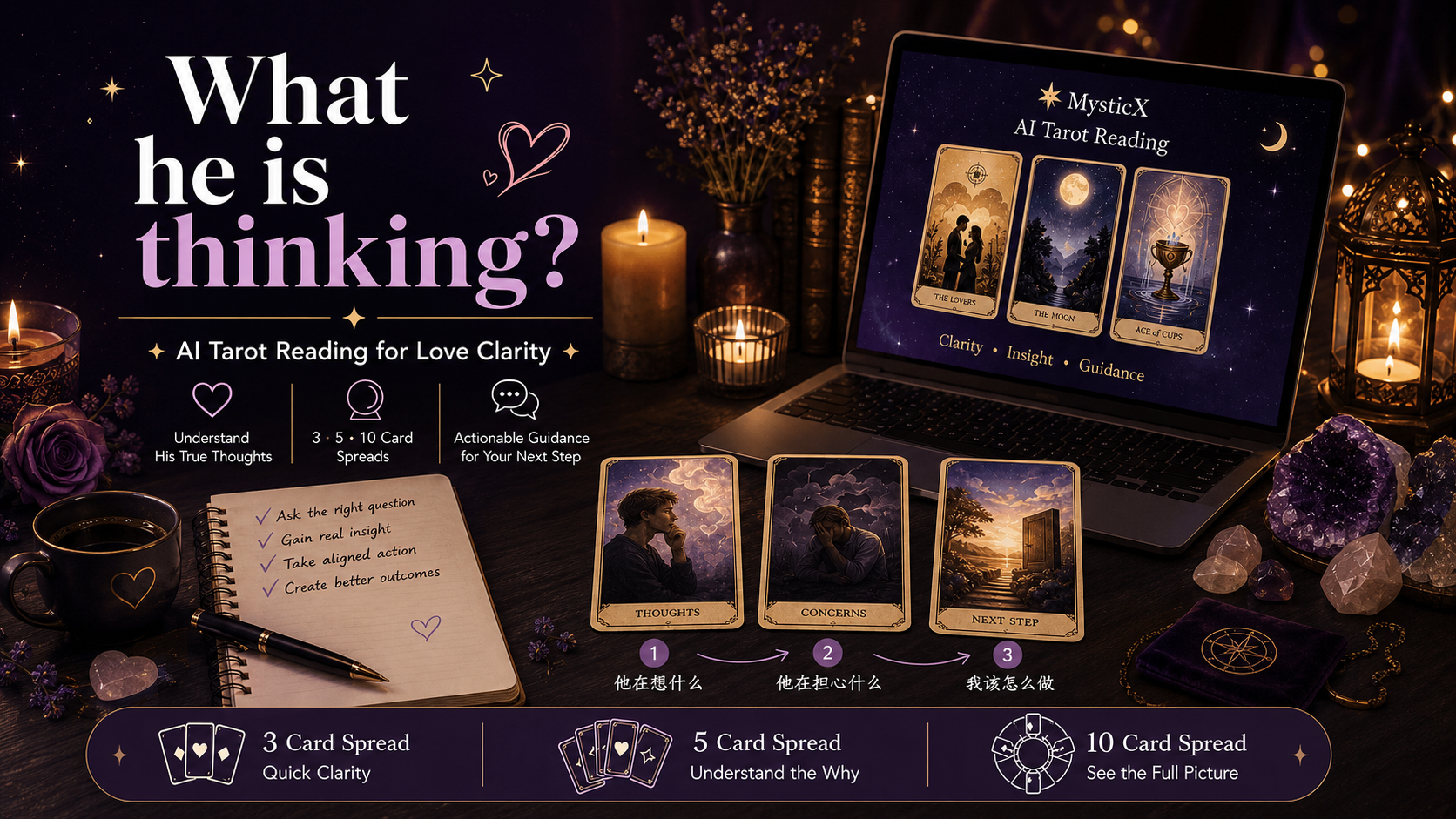
What Is He Thinking?
Maybe you did not even ask someone else. Maybe you asked yourself. And then the thought kept looping. You could not sleep. You started rereading old messages. Your finger hovered over the text box. You typed something, deleted it, typed again, deleted again. So I did something very modern.
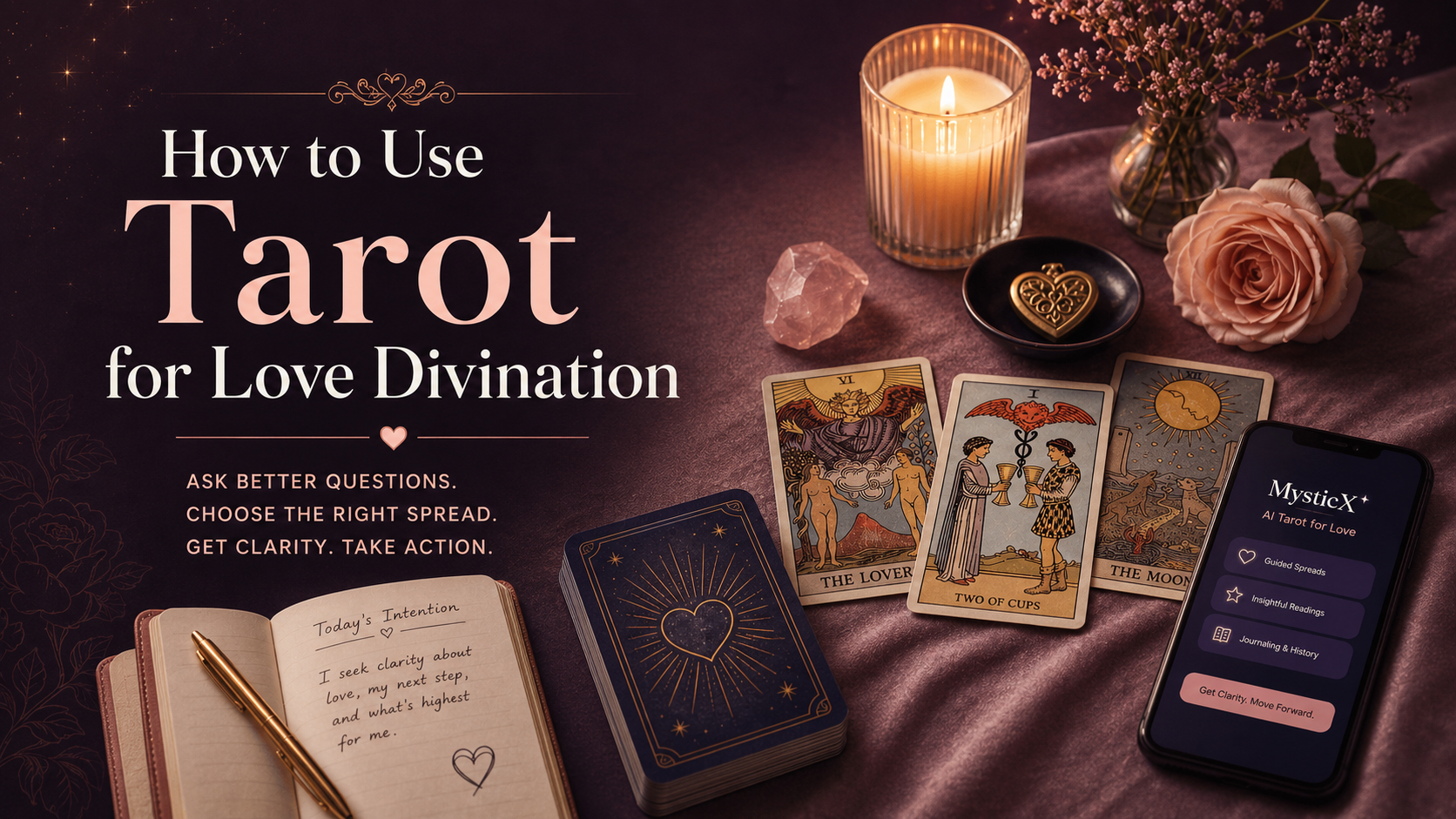
How to use Tarot for love divination
Love tarot works for the same reason journaling works. And therapy. And that one brutally honest friend who somehow sees the pattern before you do. Tarot is an insight tool. It helps you notice dynamics, blind spots, repeating loops, and the emotional weather in a connection. It can show you what is likely if nothing changes. It can also show you what changes if you change something.
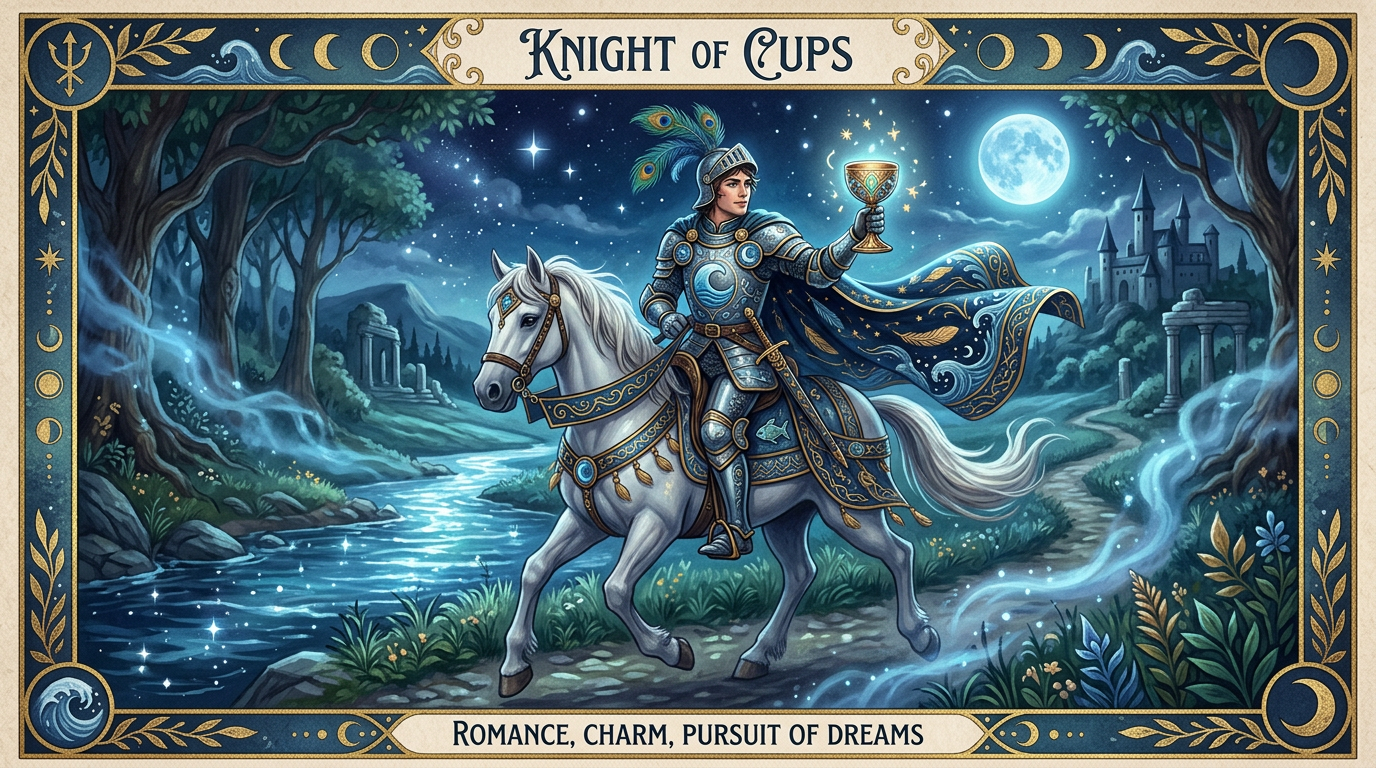
MysticX Tarot Series: Knight of Cups— Romance, Charm & Pursuit of Dreams
The Knight of Cups represents emotional pursuit, romantic expression, and following one’s ideals with intention. It often appears when you are actively moving toward something that feels meaningful—whether in love, creativity, or personal vision.