
How to Start a Daily Tarot Practice

A daily tarot practice does not need to be complicated. You do not need an elaborate spread, a perfectly quiet room, or years of experience reading cards.
One card and a few thoughtful minutes can be enough.
Drawing a daily card can help you notice your emotional patterns, understand what deserves your attention, and approach the day with greater self-awareness. The purpose is not to predict every event that will happen. It is to create a consistent moment of reflection.
Whether you use a physical deck, an AI Tarot tool, or a Free Daily Tarot reading online, the most meaningful practice is one you can return to without pressure.
What Is a Daily Tarot Practice?
A daily tarot practice is a simple routine in which you draw or receive a card each day and reflect on how its message might relate to your current life.
You might ask:
What energy should I be aware of today?
Or:
What would support me today?
The card becomes a theme rather than a fixed prediction. For example, Strength may invite patience and emotional courage. The Hermit may suggest creating space to think. The Two of Pentacles might encourage you to examine how you are balancing competing priorities.
A Daily Tarot practice works best when the card helps you pay closer attention to your choices, reactions, and needs.
Why Practice Tarot Every Day?
Consistency can make tarot easier to understand. Instead of memorizing card meanings in isolation, you begin to see how their symbolism appears in real situations.
A daily practice may help you:
- Learn tarot meanings through experience.
- Recognize recurring emotional and relationship patterns.
- Develop a stronger connection with your intuition.
- Create a pause before reacting to stress.
- Set a clear intention for the day.
- Notice how the meaning of a card changes in different contexts.
- Build a personal record of your growth over time.
The value often comes from repetition—not repeating the same question, but returning to the practice with new experiences each day.
Choose a Time You Can Maintain
The best time for a tarot practice is not necessarily sunrise or midnight. It is the time you can realistically protect.
Morning Practice
Drawing a card in the morning can help you set an intention for the day.
You might ask:
- What energy can support me today?
- What should I pay attention to?
- How can I move through today with greater awareness?
Morning readings work well if you enjoy journaling, planning, or beginning the day quietly.
Evening Practice
An evening reading can help you look back on what happened.
Try asking:
- What did today teach me?
- What emotion influenced me most?
- What should I carry forward from today?
- What am I ready to release before tomorrow?
Evening readings can be especially useful if mornings are rushed or if you prefer using tarot as part of a reflection routine.
During a Daily Break
Your practice can also happen during lunch, after work, or before bed. The time matters less than consistency.
Start with a routine you can complete in five minutes. You can always make it longer later.
Create a Simple Space
You do not need a dedicated altar or a collection of spiritual objects.
Choose a place where you can pause without too many distractions. This might be:
- A corner of your desk
- A chair near a window
- Your bedside table
- A quiet place with your phone and journal
- A favorite café during a regular break
If you use Tarot online, reduce distractions by closing unrelated apps and notifications before beginning. Treat the reading as a small moment of focused attention rather than another piece of content to scroll through.
You may want to keep a notebook nearby, but the practice should remain simple enough that you can continue even when conditions are imperfect.
Start with One Card
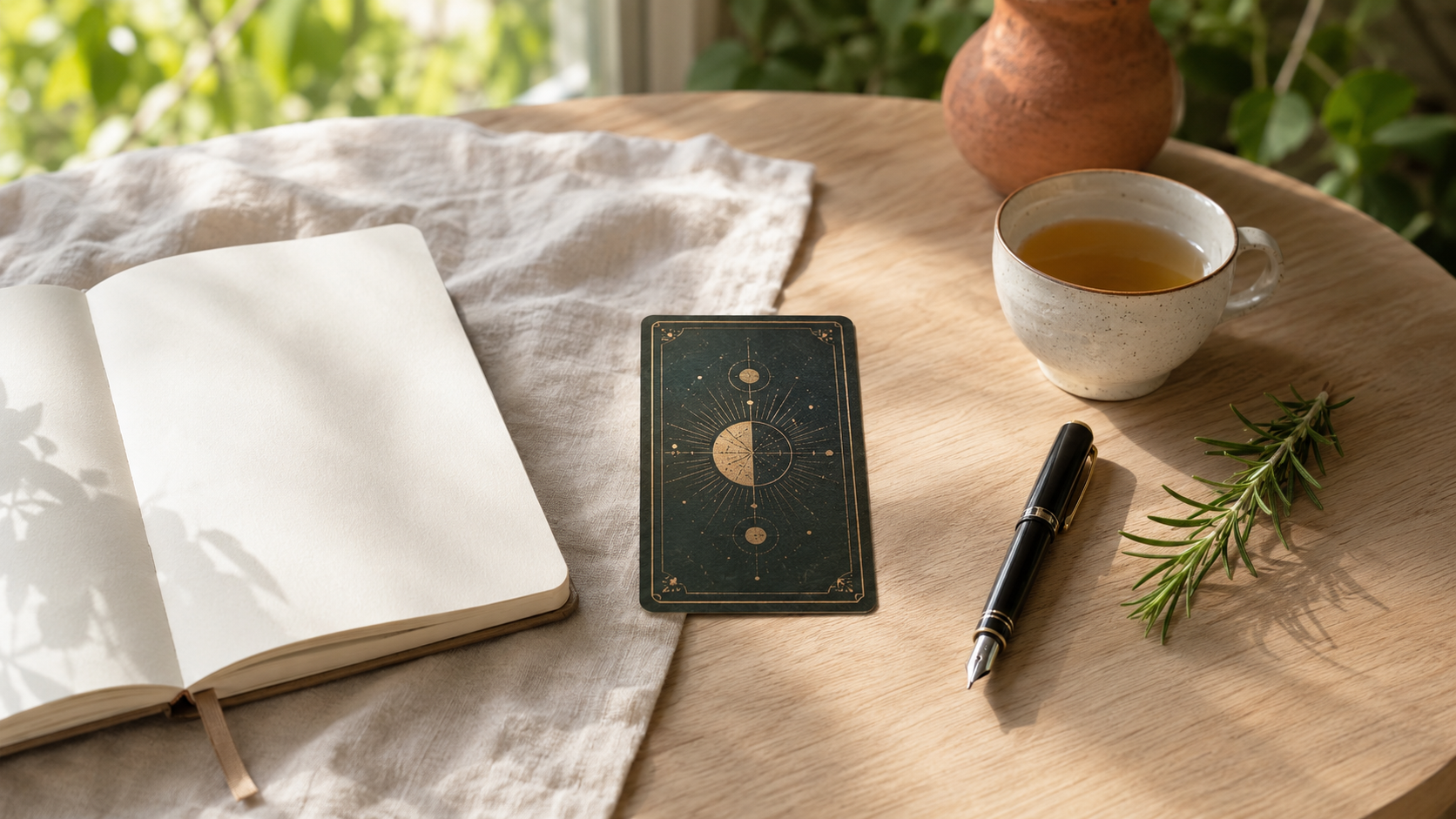
A one-card reading is usually the best format for a beginner’s daily practice.
Larger spreads can provide more detail, but they also require more time and interpretation. One card gives you a single theme to carry into the day.
Before drawing, take a breath and ask a clear question.
Good daily questions include:
- What energy is present for me today?
- What quality should I embody today?
- What may challenge me today?
- What deserves my attention?
- How can I support my emotional well-being today?
- What am I being invited to understand?
Avoid questions that attempt to predict every detail of the day, such as:
Will something bad happen today?
This wording may increase anxiety and encourage you to interpret ordinary events as signs of danger.
A more helpful question would be:
What can help me respond calmly to today’s challenges?
How to Interpret Your Daily Card
You do not need to know the traditional meaning immediately.
Begin with what you observe.
Look at the Image
If you are using an illustrated deck, notice:
- The colors
- The character’s expression
- The direction of movement
- The setting
- The symbols that attract your attention
- The emotion created by the image
Ask yourself:
What part of this card feels most relevant today?
Notice Your First Reaction
Your first reaction may reveal something important.
Do you feel relieved, disappointed, curious, or resistant? A card may be showing you an emotion you are already carrying.
Review the Traditional Meaning
After recording your initial impression, look at the card’s established themes. Compare them with your own response rather than replacing your interpretation entirely.
An AI Tarot reading can help connect the traditional meaning with your question and current context, especially if you are still learning the deck.
Turn the Card into an Intention
Translate the card into one practical sentence.
For example:
- Strength: I will respond patiently instead of forcing an outcome.
- The Hermit: I will create space to hear my own thoughts.
- Ace of Cups: I will remain open to emotional renewal.
- Eight of Pentacles: I will focus on steady progress.
- Two of Swords: I will acknowledge the decision I have been avoiding.
An intention makes the reading easier to carry into real life.
Keep a Daily Tarot Journal
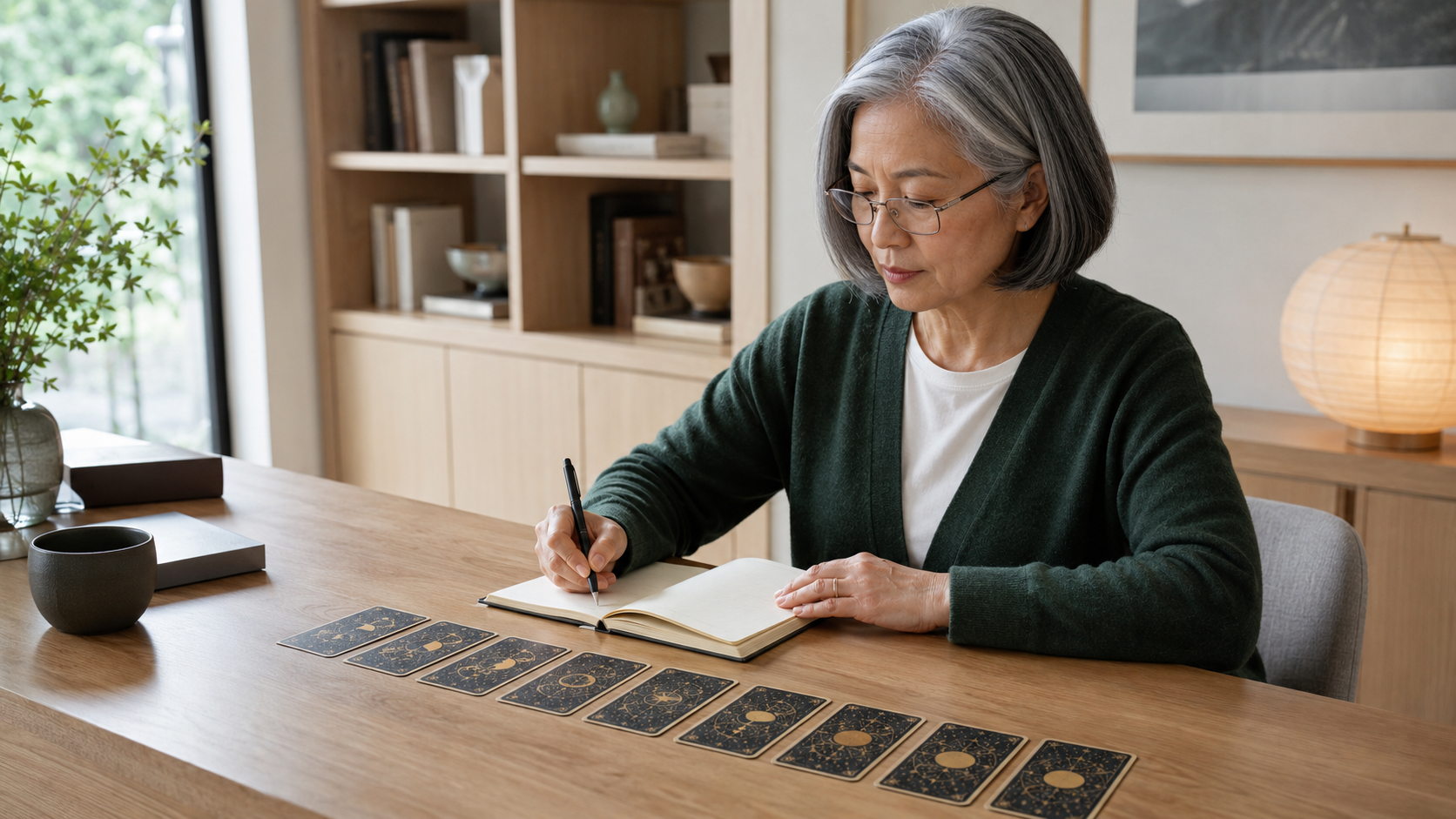
A tarot journal helps you move beyond isolated card meanings and recognize patterns over time.
Your entry can be short. Record:
- The date
- Your question
- The card
- Your first impression
- One practical intention
- A brief evening reflection
For example:
Card: Temperance
Morning intention: Slow down and look for balance before making a decision.
Evening reflection: I noticed that taking a pause helped me avoid an unnecessary argument.
After several weeks, review your entries.
You may discover that certain cards appear during similar emotional situations. You might notice that your first interpretation differs from what the day eventually teaches you. These patterns can become more valuable than any single reading.
Try a Free Daily Tarot Reading
If you do not have a physical deck—or want a routine that is easy to access anywhere—you can begin with a Free Daily Tarot reading.
Draw your daily tarot card with MysticX
Take a moment before revealing the card. Think about your intention, read the interpretation slowly, and consider how the message connects with your current emotional state.
The goal is not simply to collect a new card every day. It is to build a relationship with the meaning behind it.
What If the Card Feels Negative?
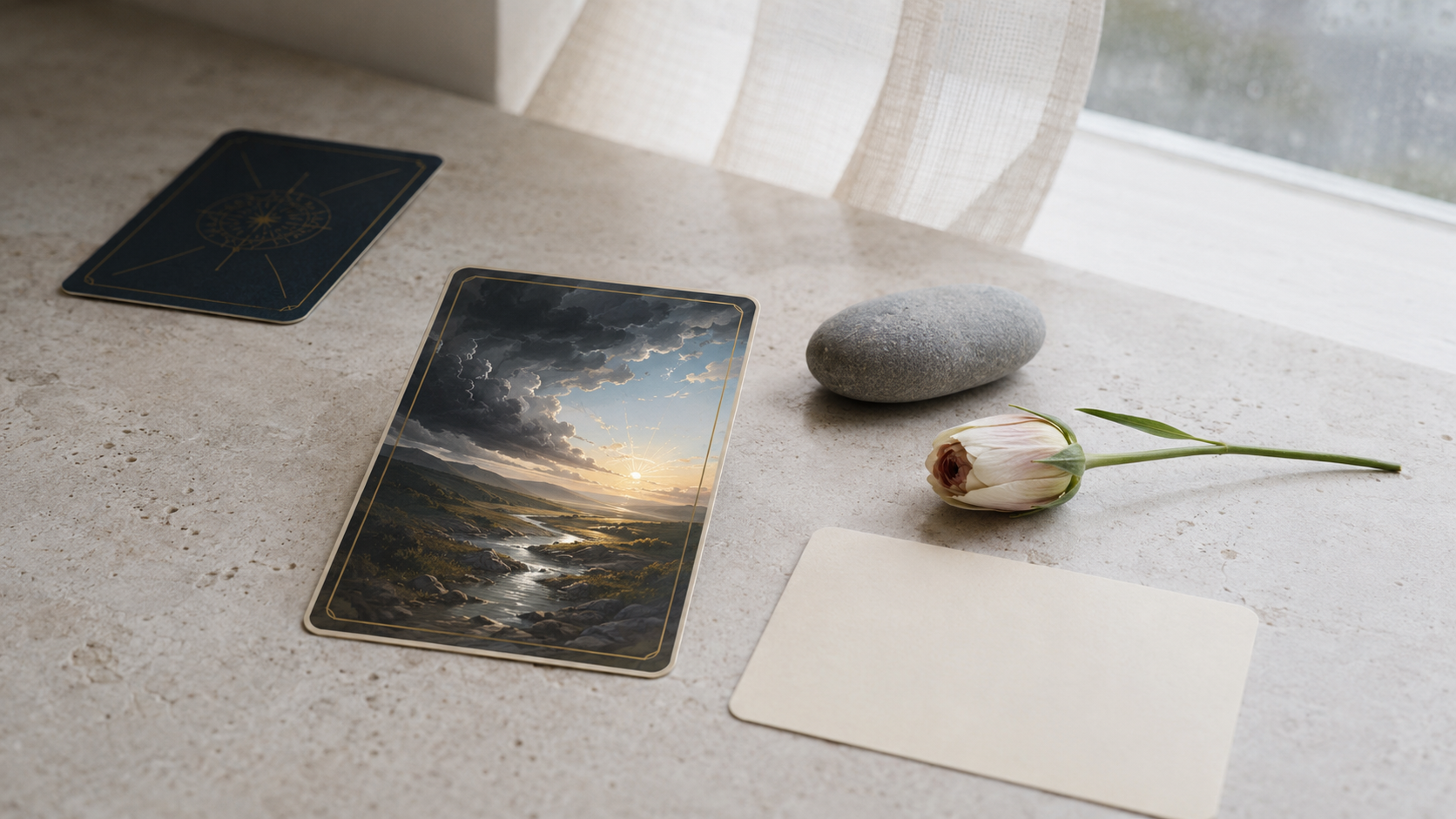
Cards such as Death, The Tower, Ten of Swords, or Five of Pentacles can feel alarming, especially at the beginning of the day.
Try not to interpret them as predictions of disaster.
Difficult cards may represent:
- A necessary ending
- An uncomfortable realization
- A change in perspective
- Emotional exhaustion
- A pattern that needs attention
- The need to ask for support
- An opportunity to respond differently
If you draw The Tower, the message may be about questioning an unstable assumption—not expecting a catastrophe. If you draw Death, it may reflect a transition or something you are ready to release.
Ask:
What constructive response does this card invite from me?
This keeps the practice focused on awareness and action.
Avoid Drawing Until You Get a Card You Like
If the daily card feels uncomfortable, it may be tempting to draw again.
Repeatedly drawing cards until you receive a positive one can weaken the practice. Instead of listening, you begin negotiating with the deck.
If the card is unclear, ask one follow-up question:
What aspect of this card should I focus on today?
You may draw one clarifying card, but avoid replacing the original card entirely. Let the first card remain the central theme.
Keep the Practice Flexible
Missing a day does not mean you failed. A daily practice should support your life rather than become another obligation.
On busy days, you might:
- Draw a card without journaling.
- Save the card and reflect in the evening.
- Use a quick Tarot online reading.
- Write only one sentence.
- Return the next day without trying to catch up.
Consistency matters, but rigidity can make the practice harder to sustain.
You can also change the format as your experience grows. Some days may call for one card, while others may benefit from a three-card spread:
- What energy is present?
- What may challenge me?
- What will support me?
The structure can evolve with your needs.
Frequently Asked Questions
What question should I ask for Daily Tarot?
A useful question is: “What energy should I be aware of today?” You can also ask what deserves your attention, what may support you, or what quality you should embody.
Can beginners practice tarot every day?
Yes. Drawing one card each day is an accessible way for beginners to learn tarot meanings and connect them with real experiences.
Is a Free Daily Tarot reading useful?
A Free Daily Tarot reading can provide a convenient card and interpretation without requiring a physical deck. Its value depends on whether you take time to reflect on the message rather than quickly drawing multiple cards.
Can I use AI Tarot for a daily practice?
Yes. AI Tarot can help explain symbolism, connect a card with your question, and offer prompts for self-awareness. Use the interpretation as guidance rather than a guaranteed prediction.
Should I draw another card if I dislike my daily card?
Usually, no. Reflect on why the card created discomfort and ask what constructive response it invites. If necessary, draw one clarifying card without replacing the original message.
Is morning or evening better for Daily Tarot?
Morning is helpful for setting an intention, while evening is useful for reviewing the day. Choose the time you can maintain consistently.
Make Daily Tarot a Moment of Self-Awareness
A meaningful daily tarot practice does not depend on perfect interpretations or elaborate rituals. It begins with one card, one clear question, and a willingness to notice what the message brings to your attention.
Keep the routine simple. Record your impressions, observe how the card appears in your day, and review your patterns over time.
Tarot works best as a mirror, not a crystal ball. Your daily card does not control what happens next—it helps you meet the day with greater awareness.
Ready to begin? Get your Free Daily Tarot reading on MysticX and discover the theme inviting your attention today.